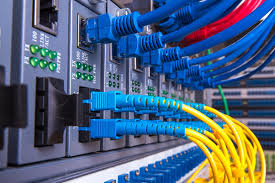
In today’s fast-evolving world, networks are vital for ensuring communication, data transformation, and more for businesses and individuals. The heart of every organization is modern communication networks, which are structured cabling networks. For most organizations, structured cabling systems are vital because they can use them to connect a building’s telecommunication infrastructure in an organized manner necessary to enable reliable data, voice, and video transmission.
Structured cabling systems are fundamental across various industries for achieving high network performance, as they are adaptable, scalable, and manageable. Structured cabling comprises six essential building blocks, which ensure seamless network connectivity and efficient network performance by performing each purpose and working together. This blog details the six crucial components of structured cabling systems.
Crucial Components of Structured Cabling Systems
- Entrance Facility:
The entrance facility is nothing but the entry points from which public and private network service cables enter the organizational buildings. The incorporation of the network demarcation point by this pivotal entrance facility shifts the cable responsibility towards the building owner from the service providers. In entrance facilities, the implementation of protective devices and grounding systems takes place to shield sensitive equipment from electrical surges and fluctuations. Entrance facilities ensure secure and efficient network signal transmission into the building and promote safety and adaptability with changes in service requirements by acting as the juncture between outside cables and internal infrastructure.
- Equipment Room
Another vital block of the structured cabling system is the equipment room, which comprises mainly networking and telecommunication equipment necessary for the enterprise building or organization to function. The equipment room includes servers, routers, switches, patch panels, and other critical devices.
The equipment room is known for supporting complex functions and centralizing key resources, such as smaller telecommunication rooms. Most organizations build this equipment room close to the building’s power source and with controlled environmental conditions to protect electronic equipment. The functionalities of the equipment room include supporting high-bandwidth and high-capacity networking needs, managing cross-connects between the backbone and horizontal building, and housing main distribution frames.
Organizations can manage cables efficiently, minimize downtime, and support scalability by carefully planning and designing equipment rooms.
- Telecommunication Room
The equipment that manages the entire organization’s telecommunications cabling will be enclosed in the telecommunications room, which is also known as the telecommunications enclosure. This telecommunication room is the central hub for the structured cabling system. The equipment in this room includes server racks, switches, routers, and patch panels.
The primary function of this structured cabling system component is to distribute the network signals efficiently to the work areas. Organizational network administrators should follow proper labeling, grounding, and environmental controls to ensure network integrity and performance.
- Backbone Cabling
Vertical cabling is another name for backbone cabling, the vital block of a structured cabling system. This building block’s primary function is to interconnect the entrance facility, equipment rooms, and telecommunication rooms across the organization’s building. It is considered the spine of the structured cabling system.
This component supports voice and data communication between the central equipment room and remote TRs by leveraging fiber optic cables that handle high bandwidth and long-distance data transmission. Backbone cables, connecting hardware, and intermediate and main cross-connects are the main components of this cabling.
- Horizontal Cabling
Within the organization building, horizontal cabling connects the telecommunication rooms to individual work on the same floor. This cabling operates through ceilings, walls, and under raised floors, so it is known as horizontal cabling. Horizontal cables, telecommunication outlets, cross-connects, and patch cords inside the TR are included in this cabling.
- Work Area
The area or point at which all the end-user devices connect to the central structured cabling systems is the work area. The end-user devices include computers, IP phones, printers, and other network-enabled devices. Generally, the components between the telecommunication outlets and the user equipment are encompassed in the work area.
Conclusion:
Organizations can have a reliable and efficient network foundation with a well-designed, structured cabling system. In creating a robust and scalable organizational infrastructure, the six building blocks of the structured cabling systems, including the entrance facility, equipment room, telecommunication room, backbone cabling, horizontal cabling, and work area, play a vital role. Organizations can build a network that performs reliably and can be scaled as needed by following TIA/EIA-568 standards and best practices.
Pick the professional structured cabling solutions to upgrade your network. VRS Technologies Pvt Ltd offers professional Structured Cabling Solutions in Saudi Arabia for SMEs, large enterprises, and more. Choose our solutions — ensure fast, reliable, and scalable connectivity for your offices, data centres, and smart buildings. Connect smarter today as our certified team designs, installs, and maintains systems on your behalf. Prepare your business for the future with our partnership.
 :
https://www.pinterest.com/vrstechnologies/
:
https://www.pinterest.com/vrstechnologies/